

Why Your Limited Company Needs Bookkeeping Help


If you are running a limited company, keeping your books up to date is not just about staying organised. It is the foundation of every important financial decision you make as a director, and getting it wrong can cost you real money.
Too many directors treat bookkeeping as something to deal with at year end. The bank statements get handed over in a pile, the accountant pieces it all together, and the numbers come as a surprise. By that point, it is often too late to do anything about them.
Here is why staying on top of your bookkeeping throughout the year matters far more than most directors realise.
Knowing how much corporation tax you will owe
Corporation tax is payable nine months and one day after your company's year end. If you have not been tracking your income and expenses properly throughout the year, your corporation tax bill can come as a shock. We see this regularly with new clients who have no idea what their taxable profit looks like until we prepare the accounts.
With up to date bookkeeping, you can see at any point during the year roughly what your corporation tax liability is building to. That means no nasty surprises and the ability to plan ahead, whether that means setting funds aside or making tax efficient decisions before the year end rather than after it.
Tracking dividends properly
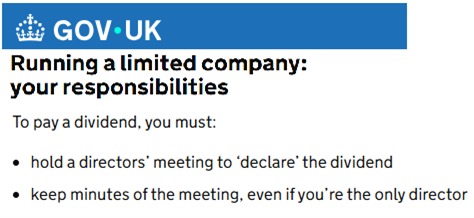
As a director of an owner managed company, you are most likely taking a combination of a small salary and dividends. Every dividend you draw needs to be supported by sufficient retained profits in the company. If you take more in dividends than the company has available in distributable reserves, you have an illegal dividend on your hands, and that creates a whole set of problems with HMRC and Companies House.
Proper bookkeeping means you always know your profit position and can draw dividends with confidence, knowing the company can support them.
Monitoring your director's loan account
Your director's loan account tracks everything that flows between you and the company that is not salary or dividends. Personal expenses paid through the company, money you have lent to the business, and any cash you have drawn out all sit in this account.
If your director's loan account goes overdrawn (meaning you owe the company money) and is not cleared within nine months of the year end, the company faces an additional tax charge under Section 455. On top of that, there can be a benefit in kind charge on you personally. Many directors do not even realise their loan account is overdrawn until their accountant tells them months after the year end, by which point it is too late to fix.
Regular bookkeeping means you can see the balance of your director's loan account at any time and take action before it becomes a problem.
Staying on top of VAT registration
If your company's taxable turnover is approaching the VAT registration threshold (currently £90,000), you need to know about it before you cross it, not after. Late registration means you will owe HMRC the VAT on sales you have already made during the period you should have been registered, and recovering that cost retrospectively from customers is not always straightforward.
Good bookkeeping gives you a live view of your turnover so you can register at the right time, plan for the impact on your pricing, and avoid penalties for late registration.
Making better commercial decisions
Beyond compliance, up to date books give you something invaluable: clarity. You can see which months are profitable and which are not. You can see where your money is going. You can make sound commercial decisions based on real figures rather than guesswork. Without accurate, current numbers, you are flying blind.
When to get help
If you are finding it difficult to keep on top of your records, or if you are not sure your books are right, it is worth speaking to an accountant sooner rather than later. The cost of regular bookkeeping support is almost always less than the cost of fixing problems that build up when records are left to drift.
At JJS Accountants, we provide bookkeeping services for limited companies in Bath and surrounding areas, as well as across the UK. We keep your records accurate and up to date so you always know where your company stands, and so your year end accounts are straightforward and free of surprises.
If you would like to discuss how we can help with your bookkeeping, get in touch or request a quote.
This article is intended as general guidance only and does not constitute formal tax or legal advice. For advice specific to your circumstances, please contact us directly.

Comments